

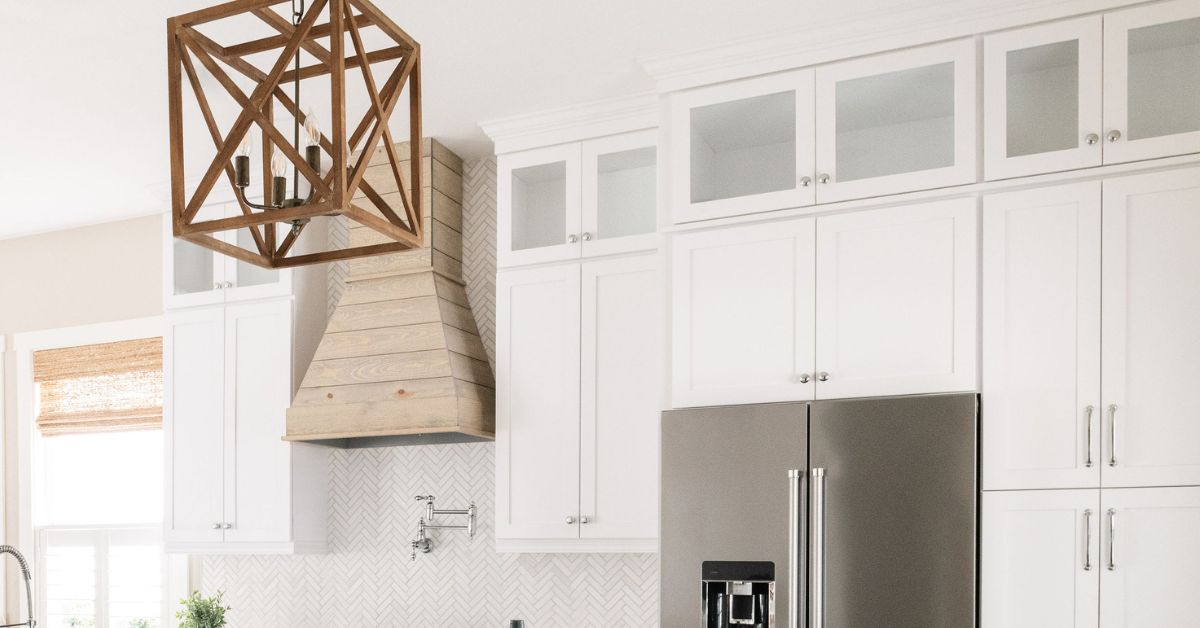
Glass cabinet doors change the vibe of a kitchen faster than almost any other upgrade. They add sparkle, show off your favorite pieces, and make the whole room feel a little more “put together.” Adding glass cabinet doors means deciding where to use them, how transparent you want them, how the door profile matches the rest of the cabinetry, and how the cabinet interiors will look when viewed. Here’s what you should know about glass cabinet doors before you commit to the look.
Why Glass Feels Different
Glass breaks up a wall of solid doors, so the kitchen feels lighter and more open. Even a small run of glass upper cabinets can add depth, as your eye sees “through” the cabinetry rather than stopping at a flat surface.
At the same time, glass makes your cabinet interiors part of the room’s look. Dishes, glassware, and serving pieces become visual elements. This can be a fun way to add personality to the room, but it can also make the room feel more cluttered when pieces aren’t placed intentionally.
Common Glass Door Styles
Glass cabinet doors can look very different depending on the type of glass you choose, and that choice shapes the mood of the whole kitchen. Some styles feel crisp and open, while others feel softer.
Clear Glass
Clear glass offers the most visibility, creating a bright, airy feel. This style works best when you keep shelves fairly coordinated, since everything in the cabinetry is on display. Consider where you place clear glass, as cabinets near the coffee station or daily-use zones show clutter more quickly. Interior lighting makes the items behind clear glass look more polished and intentional by brightening details, reducing dark corners, and turning the cabinet into a true display.
Frosted or Etched Glass
Frosted and etched glass blurs the view, so you still get the lightness of glass without feeling like every item needs to look photo-ready. This option creates a calmer, softer look and reduces visual noise in busy kitchens. Different frost levels hide more or less of the cabinet interior. Pairing frosted or etched glass with simple hardware and clean door lines keeps the effect polished.
Seeded or Textured Glass
Seeded or textured glass adds character through pattern and distortion, which helps disguise imperfect stacking and everyday mix-and-match items. Seeded glass gets its look when tiny air bubbles are trapped in the glass during manufacturing, creating a dotted, wavy appearance. Textured glass is made by pressing or rolling patterns into the hot glass as it forms, leaving a raised design that distorts the view. Seeded or textured glass reduces glare and softens reflections, so the cabinetry feels warmer.
Reeded Glass
Reeded glass has vertical ridges that blur what’s inside while still letting light pass through. Manufacturers create it by rolling or pressing the ridge pattern into hot glass as it forms. The lines add texture and a tailored, modern feel.
Where Should You Put Glass Cabinet Doors?
It’s important to know how you use your kitchen before you decide where to place glass cabinet doors. You can start by mapping your upper cabinets into three zones: showcase, everyday, and messy.
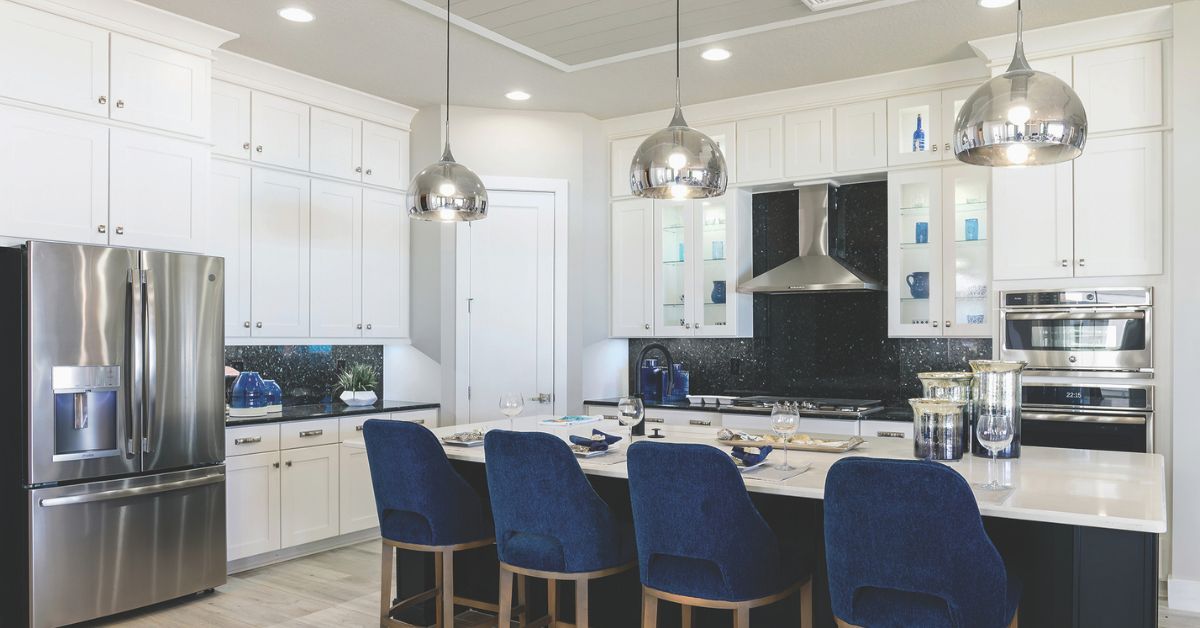
When selecting new kitchen cabinets, glass cabinet doors make the most sense in showcase zones. These cabinets sit in the most visible spots and usually hold items you can keep coordinated. It’s best to keep everyday and messy zones behind solid doors. That’s because high-use and mixed-storage cabinets look cluttered more quickly and require more maintenance to stay display-ready.
Comparing Showcase, Everyday, and Messy Zones
Showcase zones usually sit at eye level and away from the main landing areas. These zones include the upper cabinets flanking a hood, the cabinets beside a sink window, or a dedicated beverage/coffee nook.
Everyday zones hold the items you reach for constantly, like plates, bowls, and go-to mugs. These cabinets sit close to the dishwasher or main prep area, so unloading and cooking stay easy.
Messy zones hold odds and ends, backup pantry items, snack bins, and whatever gets shoved in quickly. These cabinets look best behind solid fronts so your kitchen still feels tidy.
Pairing With Solid Cabinet Doors
Glass doors look more balanced when paired with solid cabinets that match the same door style and finish. For an orderly look, use fewer glass doors and place them in matching positions, such as one on each side of a window or a hood.
A small section of glass doors near a beverage nook feels balanced when the cabinets right next to it use solid fronts. The solid cabinet fronts can hide coffee, syrups, snacks, and more.
What You’ll Store Inside
Glass doors work best for showing off the items you like seeing every day. You can group items by color, material, or purpose so the cabinet reads like a curated display rather than open storage.
Here are some items that typically look great behind glass doors:
- Matching dinner plates and salad plates.
- Glassware sets, such as stemware or tumblers.
- Neutral serving bowls and platters.
- A small collection of cookbooks.
- Decorative canisters or vases.
Cleaning and Maintenance
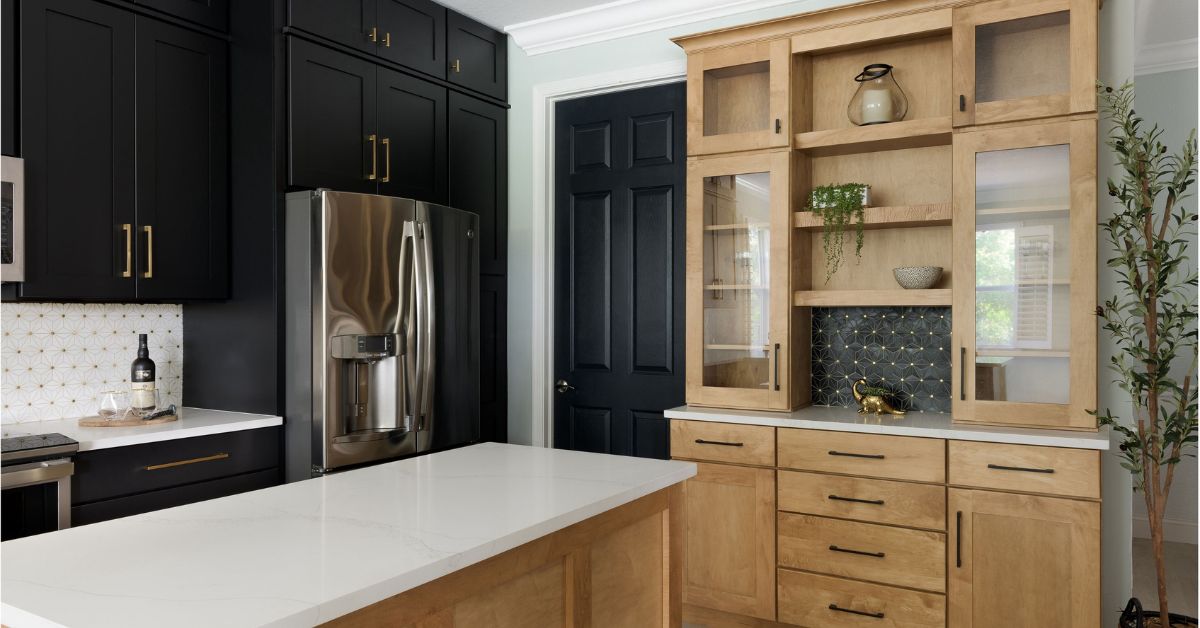
Glass shows fingerprints faster than painted wood, especially around the handle, where hands naturally rest. Smudges show up even more in busy spots, so glass placement matters if your kitchen sees constant traffic. Most messes come off quickly with a microfiber cloth and a gentle glass cleaner.
Textured or seeded glass hides prints better, and placing glass doors on cabinets you open less keeps upkeep simple. Additionally, you should choose ergonomic hardware that is easy to grab, since a comfortable pull helps keep hands off the glass.
Tips for Illuminating Displays
Cabinet lighting changes everything with glass doors. Interior lights highlight glassware and other displayed items, making the cabinet feel like part of the room’s décor, not just storage. Under-cabinet lighting also helps, since it adds glow across the backsplash and reduces harsh shadows.
These lighting choices pair well with glass doors:
- LED strip lighting along cabinet interiors.
- Small puck lights mounted inside the cabinet top.
- In-cabinet lighting with a door-activated switch.
- Warm-toned bulbs that complement dishware.
- Under-cabinet lighting that brightens counters.
Glass cabinet doors add lightness and personality, but they work best when you choose a style that complements how you use the space. Clear glass keeps everything on display, while frosted, seeded, textured, and reeded options soften the view. Smart lighting brings the whole look together by highlighting what you love and reducing dark corners. Put glass doors in showcase zones for a high-end kitchen that’s easy to maintain.